Health and Safety Policy — Skip Hire Barnet
 This Health and Safety Policy sets out the commitments and operational standards of Skip Hire Barnet for safe provision of skip hire and waste removal services. It applies to all employees, contractors and any individuals working on behalf of the skip hire company. The primary objective is to minimise risk to people and property while ensuring compliant removal and transport of household, commercial and construction waste across our service area. The policy is maintained as a living document and reviewed regularly in line with best practice.
All staff must understand that safety is integral to our rubbish collection and skip hire operations. Management will provide the necessary resources, training and supervision so that every vehicle, skip delivery or collection, and site activity is carried out with appropriate risk controls. Our approach emphasises prevention through robust planning, safe vehicle operations and clear communication of roles and responsibilities.
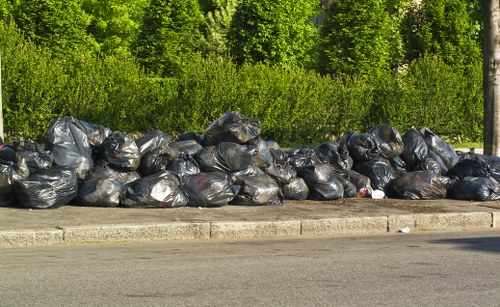 Risk assessment is central to our safe system of work. Before any skip placement, lift or waste transfer activity, a competent person will perform a documented assessment to identify hazards such as traffic interaction, manual handling, hazardous materials and access restrictions. The findings inform control measures including exclusion zones, signage, traffic management and use of mechanical aids for heavy loads.
We require strict adherence to load and segregation standards to limit environmental harm and reduce operator exposure to risk. All customers are instructed on permitted materials and the company reserves the right to refuse collection or require removal of prohibited waste. Where controlled or hazardous waste is encountered, staff will follow the designated hazardous waste procedure and engage licensed disposal routes to protect workers and the environment.
 Personal protective equipment (PPE) is mandatory for operational staff. This includes high-visibility clothing, safety footwear, gloves, eye protection and respiratory protection where dust or fumes are present. PPE is provided, maintained and replaced as necessary. Supervisors will ensure compliance and monitor correct PPE usage during vehicle loading, site operations and waste handling.
Vehicle and plant safety standards are enforced across the fleet. Drivers receive specific instruction on safe driving with a loaded skip, securement of loads, route planning and vehicle checks. Mechanical maintenance, daily inspections and load restraint checks reduce the risk of incidents on public roads. Any defects or near-miss observations must be reported immediately through the incident reporting system.
Training and competence form the backbone of our safety culture. All team members complete induction training that covers manual handling, traffic management, hazardous materials awareness and emergency procedures. Refresher training and toolbox talks are held periodically to reinforce safe work practices and to share lessons from incident investigations.
 Emergency response arrangements are established to protect people and limit environmental impact in the event of a spill, fire, injury or release of hazardous substances. Staff are trained in first aid, spill containment and emergency communications. The company maintains a clear chain of command, emergency contact protocols and a requirement to preserve evidence and scene integrity for subsequent investigation.
 Incident reporting, investigation and corrective action drive continuous improvement. All accidents, incidents and near misses must be reported without delay. Investigations identify root causes and lead to corrective measures, documented changes to procedures and targeted training. Records are maintained to demonstrate compliance and to support trend analysis that informs proactive risk reduction.
Responsibilities and Compliance
Management has overall responsibility for ensuring the implementation and review of this Health and Safety Policy. Managers will ensure adequate resources, oversight and performance monitoring. Employees are responsible for following safe systems of work, using PPE, reporting hazards and participating in training. Contractors engaged by the skip hire company must operate to equivalent standards.
Key Safety Controls
- Risk assessments for all operations involving skip placement, collections and waste handling.
- Traffic management and safe access arrangements at collection sites.
- Waste segregation to prevent contamination and ensure safe disposal routes.
- PPE provision and enforcement of use on site and during vehicle operations.
- Competency-based training and documented refresher programmes.
Monitoring and review are performed through regular audits, vehicle checks and safety performance reviews. The policy will be reviewed at least annually or whenever there is a significant change to operations, vehicle fleet, legislation or following a serious incident. The company aims to exceed minimum standards where practical and to promote a safety-first culture across all rubbish collection and skip hire activities.
By adopting these measures, Skip Hire Barnet demonstrates a clear commitment to protecting staff, customers and the public while delivering responsible waste services. The company expects cooperation from all stakeholders and will take proportionate action in cases of non-compliance to preserve safety and environmental integrity.
Signed: Operations Director — Policy effective from the date of issue and subject to ongoing review.
Core Principles
The following principles underpin our health and safety approach: prevention, continual improvement, legal compliance, competence, and transparency in reporting and record keeping. These principles guide decision-making for every skip hire and rubbish removal operation undertaken by the company.
Additional Measures
Where necessary, specialist contractors are engaged for complex waste streams. The company will ensure that such subcontractors hold appropriate licences, insurance and safety documentation before any work commences.
Conclusion: Safety is a shared responsibility. Skip hire operations can present varied hazards; through structured risk management, clear responsibilities, and ongoing training we aim to deliver safe, reliable and compliant rubbish and skip hire services across our service area.